If you’ve ever applied for credit and felt confused about why lenders keep checking different scores, you’re not alone. Many people assume all credit scores work the same way, but that’s far from true.
Understanding how personal and business credit differ can save you from higher interest rates, rejected applications, and financial stress. In this guide, we’ll break down the differences in simple terms so you can make smarter financial decisions with confidence.
What Is a Personal Credit Score?
A personal credit score is a numerical summary of your individual creditworthiness. It reflects how responsibly you manage borrowed money, based on factors like repayment history, credit card usage, and outstanding debt.
Lenders rely on this score to judge how risky it is to lend to you. A good credit score can help you qualify for better interest rates and faster approvals, especially when applying for a personal loan or using credit cards for everyday needs.
What Is a Business Credit Score?
A business credit score measures the financial reliability of a company rather than an individual. It’s linked to the business’s legal identity and reflects how consistently the company pays vendors, suppliers, and lenders. Unlike personal credit, this score can often be viewed by partners and creditors.
It plays a major role when applying for a business loan, negotiating payment terms, or building trust with vendors as your company grows.
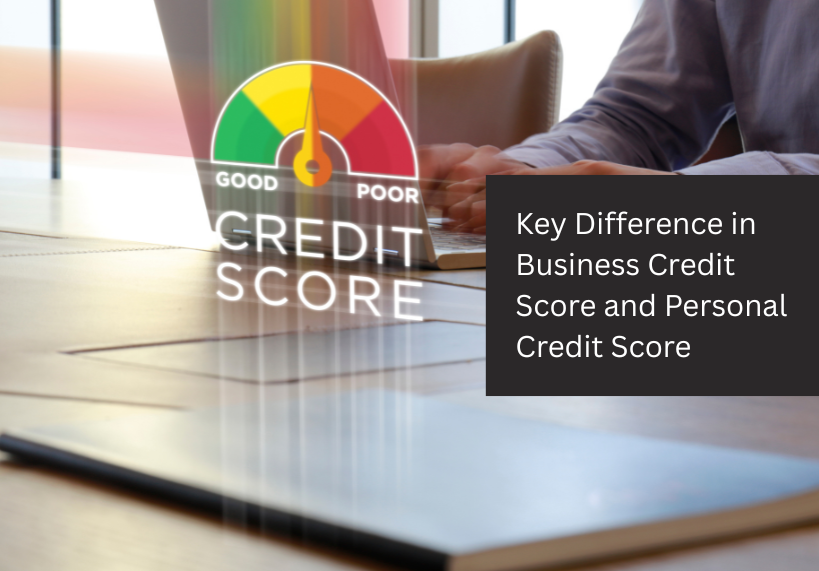
Difference Between Personal Credit Score vs. Business Credit Score
| Basis of Comparison | Personal Credit Score | Business Credit Score |
| Ownership | Linked to an individual and follows their financial history over time. | Linked to the business entity, separate from the owner |
| Primary Purpose | Measures how responsibly a person manages personal finances | Measures how reliably a business manages its financial obligations |
| Risk Exposure | Individual is fully responsible for repayment | Helps separate personal liability from business finances |
| Privacy | Credit report is private and accessed only with permission | Business credit profiles may be accessible to lenders, suppliers, and authorised partners. |
| Evaluation Factors | Focuses on repayment history, credit utilisation, and outstanding debt | Focuses on payment timeliness, business stability, and operational history |
| Impact on Borrowing | Influences approval and interest rates for personal credit | Affects funding eligibility and vendor trust for businesses |
| Growth Potential | Limited by individual income and credit capacity | Can scale as the business grows and revenue increases |
| Long-Term Benefit | Builds personal financial credibility | Strengthens business credibility and borrowing power |
In short, personal credit reflects individual financial behaviour, while business credit reflects how reliably a company meets its financial obligations.
How Can You Boost Your Personal and Business Credit Score?
Improving your credit scores starts with consistency. Always pay bills on time, as payment history carries the most weight for both individuals and businesses. Keep credit usage low and avoid maxing out available limits, since high utilisation signals risk.
Limit unnecessary credit applications, as frequent enquiries can hurt credibility. For business owners, separating personal and company finances early is critical, open dedicated accounts and ensure vendors report payments correctly.
Regularly review credit reports to spot errors or missed entries that could drag your score down. Building credit is a long-term process, but disciplined habits and steady financial behaviour can significantly improve borrowing power over time.
Conclusion
Understanding the difference between personal and business credit scores gives you greater control over your financial future. Each score serves a distinct purpose and impacts borrowing in unique ways.
By managing them responsibly and keeping finances clearly separated, you can unlock better funding opportunities, lower costs, and stronger financial credibility, both personally and professionally.
FAQs:
1. Can my personal credit score affect my business credit score?
Yes. For new or small businesses, lenders often review the owner’s personal credit, especially if the business lacks a strong credit history.
2. Is it possible to build business credit without affecting personal credit?
Yes. By registering your business properly and keeping finances separate, you can build business credit independently over time.
3. Which credit score do lenders check first for small businesses?
Most lenders initially check personal credit, but as the business matures, the business credit score becomes more important.
4. How often should I check my credit scores?
It’s a good practice to review both business and personal credit reports at least once every few months to catch errors early.
5. Does closing a business impact personal credit?
Closing a business doesn’t automatically affect personal credit unless personal guarantees or unpaid debts are involved.
Recent Posts


Get instant personal loans with flexible EMIs