Taking a loan is a big decision. But what most people don’t realize is that the interest rate type you choose can make a huge difference in how much you repay over time.
When you apply for a personal loan, you’ll usually see two options: fixed interest rate and floating interest rate. One stays the same, the other changes depending on the market. Sounds simple, right? But the confusion starts when you try to decide which one is actually better for you.
Don’t worry, this guide breaks everything down in a clear and friendly way so you can make the right choice without stress.
What is a Fixed Interest Rate Personal Loan?
A fixed interest rate means the interest rate stays the same from the first EMI to the last. It doesn’t matter what happens in the market, your interest rate will not change during the entire loan period.
The biggest benefit? Your monthly EMI stays the same. So you always know how much money will go out every month.
This makes fixed interest a great option for people who like stability. If you’re someone who plans your budget carefully and doesn’t want surprises, fixed is usually the safer choice.
It’s also useful when interest rates in the market are expected to rise. Because even if rates go up later, your loan won’t get more expensive.
What is a Floating Interest Rate Personal Loan?
A floating interest rate works a little differently. It changes over time based on market conditions and benchmark rates.
That means your EMI can go up or down during your loan tenure.
Here’s the good part: floating rates often start lower than fixed rates in many market conditions, which can make the loan appear cheaper at the beginning. However, this varies by lender and market trends.
But here’s the catch: if interest rates rise later, your EMI may increase too. And that can feel stressful if you’re not prepared for it.
Floating interest is usually chosen by people who:
- Can handle small changes in their EMI
- Want to benefit if interest rates drop
- Prefer flexibility over stability
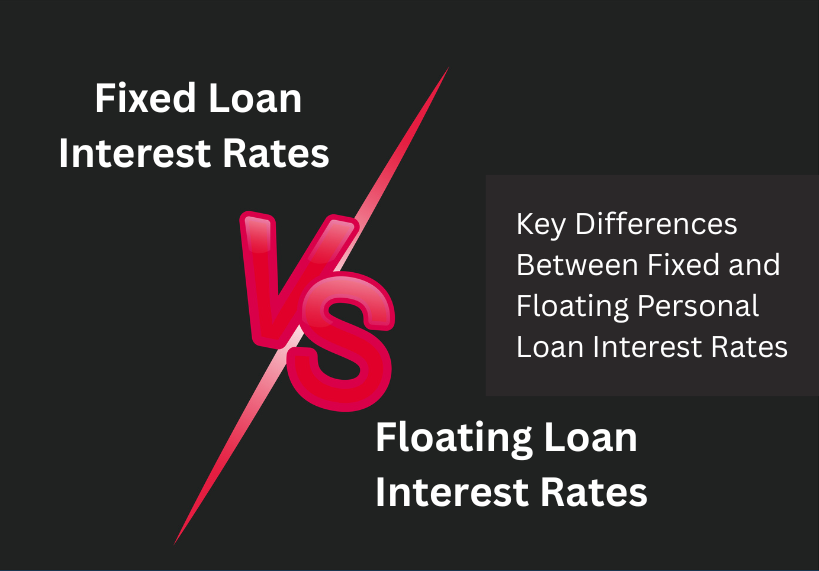
What’s the Difference Between Fixed and Floating Personal Loan Interest Rates?
The main difference is simple:
- Fixed interest rate stays the same
- Floating interest rate changes over time
But that one difference impacts your EMI, your budget planning, and even your overall repayment amount.
Here’s a clear comparison:
| Feature | Fixed Interest Rate | Floating Interest Rate |
| Rate Type | Constant | Changes with the market |
| EMI Amount | Stays the same | Can increase or decrease |
| Best For | People who want stability | People who can handle changes |
| Risk Level | Low | Medium to high |
| Starting Rate | Usually slightly higher | Often lower at the start |
| Budget Planning | Easy | Needs flexibility |
| Impact of Rate Changes | No impact | Direct impact |
| Total Cost | Predictable | May become cheaper or costlier |
| Works Best When | Rates may rise | Rates may fall or stay stable |
| Peace of Mind | High | Depends on market movement |
Quick summary:
If you want your EMIs to feel predictable, go fixed.
If you want a chance to save money and don’t mind uncertainty, floating can work.
Benefits of Fixed & Floating Interest Rates
Let’s keep this simple. Both fixed and floating interest rates have benefits, it depends on what you personally want.
Benefits of Fixed Interest Rate
- Stable EMI every month (no sudden changes)
- Easy budgeting, especially if you track expenses closely
- No stress from market rate changes
- Good for long-term planning
- Best for people who want certainty
If you don’t like financial surprises, fixed interest is a comfortable choice.
Benefits of Floating Interest Rate
- Often cheaper at the beginning
- Can reduce total interest if market rates drop
- Better for flexible budgets
- Works well if you plan to prepay early
- Helpful when interest rates are stable
If you’re okay taking a small risk for possible savings, floating interest can be worth it.
Fixed or Floating Interest Rate: What Should You Choose in 2026?
Now let’s get to the real question, what should you choose in 2026?
The truth is: the best option depends on your financial situation and your comfort level.
If you’re searching for a fixed or floating interest rate which is better, here’s a quick way to decide.
Choose Fixed Interest Rate if:
- You want full EMI stability
- Your monthly budget is tight and you don’t want changes
- You prefer safety over savings
- You expect interest rates may increase based on current market conditions
- You want stress-free repayment planning
Fixed interest is a great choice when you want peace of mind. You’ll know your EMI amount in advance, and you can plan your expenses easily.
Choose Floating Interest Rate if:
- You can handle EMI ups and downs
- You have a flexible monthly income or extra savings
- You expect interest rates to remain stable or decline based on market outlook
- You want a chance to pay less total interest
- You plan to close your loan early
Floating interest can be smart if you’re comfortable with changes and want to benefit from falling rates.
Pro tip: Don’t choose only based on the interest rate number. Always check processing fees, foreclosure rules, and prepayment charges too.
Conclusion
Fixed and floating interest rates both have their own advantages. Fixed rates give you stable EMIs and stress-free budgeting. Floating rates give you flexibility and can help you save money when interest rates drop.
The best choice depends on what matters more to you, certainty or potential savings. If you want a smooth and predictable repayment journey, fixed is a safe option. If you’re comfortable with market-linked changes and want to take advantage of lower rates, floating could work better.
Either way, once you understand the difference clearly, choosing becomes much easier and comparing options through platforms like LoanTap can help you make a more confident decision.
FAQs
1. Is fixed interest rate better than floating?
Fixed is better for stability. Floating can be better for savings if interest rates fall.
2. Can floating interest rates increase anytime?
Yes. Floating rates change with the market, so your EMI may increase if rates rise.
3. Which option is best for first-time borrowers?
Fixed interest is usually easier for first-time borrowers because it keeps EMIs predictable.
4. Can I switch from floating to fixed later?
Some lenders may allow switching between floating and fixed interest rates during the loan tenure. This depends on lender policies and may involve conversion fees or specific conditions mentioned in the sanction letter.
5. Which is better for short-term loans?
Floating can work well for short-term loans if rates stay stable and you plan early repayment.
Recent Posts

Get instant personal loans with flexible EMIs