Quick answer
- BNPL splits one purchase into a few installments, often at no extra cost if you pay on time.
- Credit card gives you a reusable limit, and charges high interest on any unpaid bill.
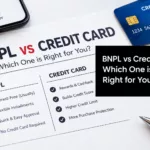
- This Guide compares BNPL vs credit card for Indian buyers on rupee cost, CIBIL impact and RBI rules.
Introduction
With over 10 years of experience in fintech, LoanTap helps consumers understand borrowing and repayment options simply and practically .
Open any shopping app in India offers several ways to pay, including Buy Now, Pay Later (BNPL) and credit cards. Both let you pay for a purchase later, but the costs and repayment terms can be quite different. Fees, interest, repayment habits, credit reporting, and other terms can all affect what you eventually pay.
When comparing BNPL vs credit card, consider a ₹30,000 phone purchase. A BNPL plan may split the amount into three ₹10,000 installments, with no additional interest if the plan is interest-free and you pay on time. On a credit card, if you pay only the minimum due, interest of about 3% to 3.5% a month starts on the unpaid ₹30,000. That’s roughly ₹900 to ₹1,050 for every month it stays pending.
This guide compares both options based on cost, repayment structure, credit score impact, and RBI rules, helping you understand which factors to consider before choosing a payment method.
What Is BNPL?
BNPL (Buy Now, Pay Later) lets you take a product today and pay for it later, usually in a few equal installments. You’ll see it at checkout on shopping apps and partner stores.
- Instant approval
- Small limits
- Works only at partner merchants
- Short repayment window
What Is a Credit Card?
A credit card gives you a spending limit set by the bank. You spend, get a bill every month, and pay by the due date. If you pay the full bill, you usually pay no interest.
- Accepted almost everywhere
- Rewards and cashback
- Higher limits
- Annual fees on many cards
Difference Between BNPL and Credit Card
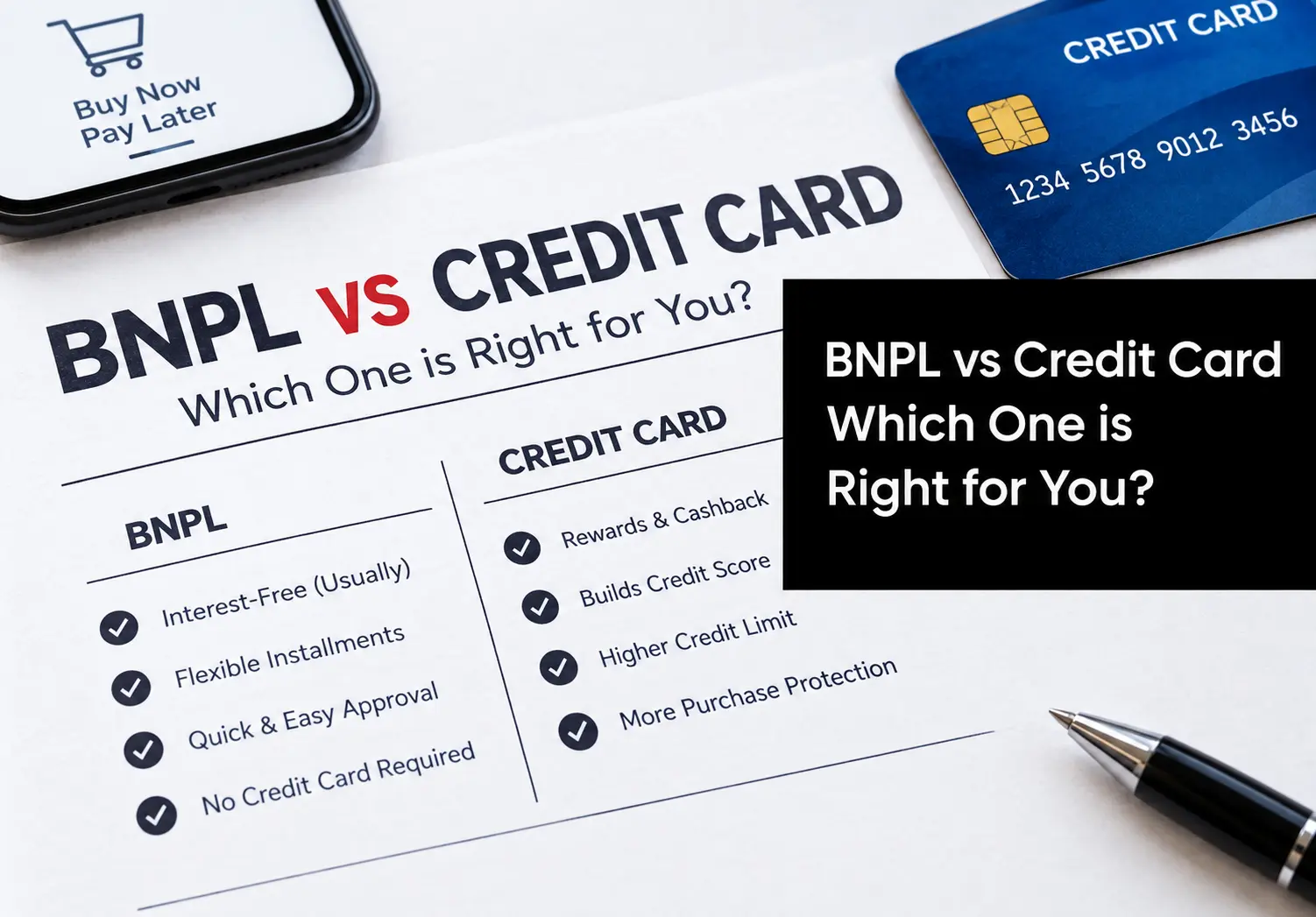
BNPL and credit cards both allow you to buy something now and pay later, but they work differently. BNPL is generally designed around a specific purchase or short repayment plan, while a credit card provides a reusable credit limit that you can use for multiple purchases.
The right comparison depends on the repayment period, interest or fees, late-payment charges, credit reporting, and how you plan to use the facility.
| Feature | BNPL | Credit Card |
| What is it? | A short-term credit facility that lets you split or postpone payment for a specific purchase. | A reusable line of credit that lets you make multiple purchases up to your approved credit limit. |
| How does repayment work? | You usually repay the purchase in fixed installments over a short period. | You receive a monthly bill and can either pay the full amount or, subject to the card terms, pay the minimum due and carry the remaining balance. |
| Approval & eligibility | Some BNPL providers may offer quick eligibility checks, although requirements vary. | Typically involves an application and checks such as income, credit history and other eligibility criteria. |
| Credit limit | Usually linked to the provider’s approved limit and the particular transaction. | A predefined credit limit that can generally be reused after repayment. |
| Example: ₹30,000 purchase | If the plan is interest-free with no applicable fees, you could repay ₹10,000 × 3 = ₹30,000. | If you pay the entire ₹30,000 bill by the due date, you generally avoid purchase interest. If you carry the balance, interest and applicable taxes/charges can increase the amount payable. |
| Additional charges | Depending on the provider, there may be processing, convenience or late-payment charges, plus applicable taxes. | Depending on the card, charges may include annual fees, cash-advance fees, late-payment charges and other applicable fees and taxes. |
| Late payment | A late payment may result in charges and, depending on the provider and reporting arrangement, may affect your credit history. | Late payment can result in charges and interest and may affect your credit history. |
| Where can you use it? | Usually at participating merchants, apps or platforms supported by the BNPL provider. | Generally accepted across a much wider range of online and offline merchants, depending on the card network and merchant. |
| Credit score impact | Your impact depends on whether and how the provider reports your payments to credit bureaus. | Responsible repayment can help establish a positive credit history, while missed or late payments can negatively affect it. |
| Best suited for | A planned purchase that you can comfortably repay within the agreed schedule. | People who want a reusable payment facility for multiple purchases and can manage their monthly repayments responsibly. |
If you pay on time, both can be pretty affordable. The real difference shows up when you miss a payment. With a credit card, interest can keep adding up on the unpaid amount. With BNPL, you may have to pay a late fee or other charges, depending on the provider.
BNPL Pros and Cons
Pros
- Quick approval with little paperwork, so it’s easy for first-time borrowers.
- No extra cost if you repay within the plan period (check your provider).
Cons
- Late fees can pile up fast, and a missed installment can hurt your CIBIL score.
- It’s easy to overspend, because small installments hide the total you owe.
Benefits and Disadvantages of Credit Card
Benefits
- Rewards, cashback and offers on spending you already do.
- Works almost everywhere, with no interest if you pay the full bill by the due date.
Disadvantages
- Interest on unpaid balances is high, and can be 3 % to 3.5% a month.
- Annual fees and the minimum-due trap can keep you in debt for a long time.
How Is Buy Now Pay Later Different From a Credit Card?
Think of BNPL as borrowing money for one purchase, while a credit card gives you a reusable credit limit. With BNPL, you pay for one item in fixed installments and finish once the final payment is made. With a card, your available limit can increase again as you repay, allowing you to make more purchases.
BNPL is usually available at selected partner stores, while credit cards are accepted at most online and offline stores. The risks are different too. BNPL can make a purchase feel affordable because the cost is divided into smaller payments, while a credit card gives you a larger limit that can be tempting to use. So, when comparing credit cards and BNPL, think about whether you need credit for one purchase or expect to use it regularly.
BNPL Rules in India: What to Know
BNPL is treated as a form of digital credit when it is offered as lending. RBI rules require regulated lenders and their digital lending partners to follow requirements around disclosures, borrower protection and reporting. BNPL loans provided through digital lending apps can also be reported to credit bureaus, so missed payments may affect your credit history.
RBI also changed the way credit could be used through prepaid wallets, pushing many BNPL models toward partnerships with regulated banks and NBFCs. Because BNPL products can work differently, always check who the actual lender is, the charges, repayment terms and credit-reporting policy before using one.
Conclusion
For a one-off purchase you can clear in a few weeks, BNPL is usually cheaper because it often adds no interest. For regular spending, rewards and a stronger credit history, a credit card is better, as long as you pay the full bill every month. Both can hurt your CIBIL score if you miss payments, and a card costs more once interest starts. Pick the option you’re sure you can repay on time.If you want a limit you can convert to EMIs, look at the Limitless Card.
Read More: Difference Between Buy Now Pay Later vs Personal Loan? Which Is better in 2026?
FAQ About Bnpl Vs Credit Card
1. Is BNPL the same as a credit card?
No. BNPL is short-term credit for one purchase, repaid in fixed installments, mostly at partner stores. A credit card gives you a reusable limit you can use almost anywhere. In the buy now pay later vs credit card comparison, the card is more flexible and BNPL is simpler.
2. What is the difference between pay later and credit card?
Pay later vs credit card comes down to flexibility and cost. Pay later is a small, fixed-term loan with fewer places to use it. A card is a revolving limit with rewards, but it charges high interest on unpaid bills.
3. What is the disadvantage of buy now pay later?
The biggest one is overspending. Small instalments make a big purchase feel cheap. Late fees can add up, limits are low, and a missed payment can lower your CIBIL score.
4. What Are 5 Disadvantages of a Credit Card?
- High interest: If you don’t pay the full bill, interest can quickly increase the amount you owe.
- Extra fees: Some cards charge annual fees and other fees that can add to your overall cost.
- Easy to overspend: A large credit limit can tempt you to spend more than you can comfortably repay.
- Minimum payment trap: Paying only the minimum can keep your balance around for much longer.
- Impact on CIBIL score: Late payments or using too much of your credit limit can hurt your credit score.
5. Does pay later affect CIBIL?
Yes, it can. If the provider reports to credit bureaus, on-time payments can help and missed ones can hurt. Not every pay-later product reports the same way, so ask your provider before you use it.
6. Which payment method is more suitable for small online purchases in India, BNPL or credit card?
BNPL is usually more suitable for small online purchases in India if you can repay within the plan period. Approval is quick, instalments are fixed, and many plans add no interest. A credit card is just as good if you already have one and pay the full bill by the due date, and it also gives you rewards. Skip both if you may miss the payment.
Recent Posts


Get instant personal loans with flexible EMIs