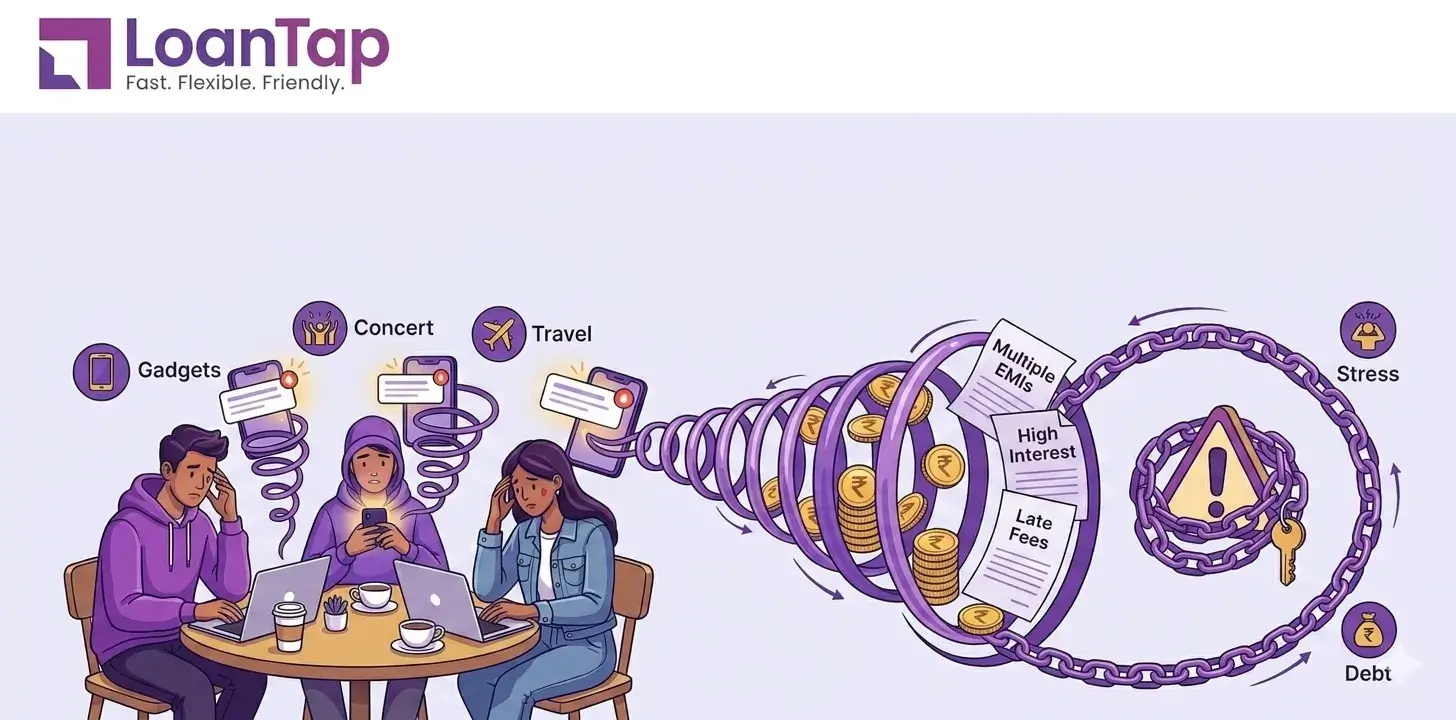
For Gen-Z convenience is everything, especially when it comes to money. With loan apps and “buy now, pay later” options, getting quick credit is easier than ever. What starts as a small, convenient solution for expenses often feels harmless.
Easy access often leads to frequent borrowing, and before you realize it, multiple small instant loans can pile up into a serious debt. This blog explores why Gen Z is turning to instant loans and how it can turn into a debt trap.
The Growth of Instant Borrowing in Gen Z
GenZ’s financial habits are changing to include instant borrowing because it is quick, easy, and available online.
Key Points:
Easy access to credit:
Loan apps offer quick approvals with minimal documentation, makes borrowing feel effortless
Lifestyle-driven spending:
Loans are increasingly used for shopping, travel and subscriptions and not just emergencies
Buy Now, Pay Later culture:
Flexible payment options reduce the impact of spending, encouraging more purchases.
Not knowing much about money:
A lot of young people who borrow money don’t realize how high interest rates, late fees, and the pressure to pay back the loan are.
Social influence:
Social media trends and lifestyle comparisons often push Gen Z’s toward higher spending
It shows how convenience and digital access is reshaping the borrowing habits, often without understanding the long-term impact.
Why Gen Z Prefers Small Loans?
Instant loans appeal to GenZ’s because they are quick, flexible and manageable.
Reasons:
- Instant access: With instant loan apps, you will get cash quickly
- Less stress, smaller amounts: Borrowing is safer than taking out big loans.
- Less paperwork: No long forms to fill out.
- Easy ways to pay back: short-term plans or easy payment options
- Convenience for your lifestyle: Helps cover everyday or impulsive expenses
How the Debt Trap Actually Starts?
Debt usually begins with taking a few small loans, looks small and completely manageable at the initial point.
How it happens:
One small loan
It often begins with a quick loan for something minor like, shopping, bills, or any other expense.
Easy repeat borrowing
Since approval is fast,taking another loan doesn’t feel like a big deal
More apps, multiple loans
People who borrow money start using multiple apps and lose track of how much they spend.
Overlapping repayments
EMIs and due dates clash, making it harder to manage cash flow.
What starts as a quick fix slowly turns into a cycle that’s difficult to break.
The “Small EMI Illusion”
This is where things start going wrong.
Let’s say:
- Loan 1 → ₹2,000 EMI
- Loan 2 → ₹3,000 EMI
- BNPL → ₹2,500 EMI
- Credit card EMI → ₹4,000
Total EMI = ₹11,500
Individually, each loan felt “small.”
Together, they become a serious financial burden.
Hidden Risks Most Borrowers Don’t Realize:
High interest costs
Even small loans can become expensive due to high effective interest rates.
Fees that aren’t obvious
Extra fees and penalties slowly add to the amount you owe.
Simple debt stacking
The ease of getting into debt can make it easy for many loans to pile up.
Short time to pay back
Deadlines make it harder to keep track of money.
Credit score impact
Missed EMIs can affect future borrowing ability.
Red Flags You Should Not Ignore:
Borrowing to repay loans
Taking new loans to clear old ones is a clear sign of a debt cycle.
Multiple loan apps
Using several loan apps makes it hard to track repayment and increases risk.
Missing EMIs
When people don’t pay EMI on time, they have to pay more in penalties and interest.
Always short on money
Running out of funds might be a sign of dependence on credit
Ignoring charges
Not checking interest and fees can make loans more expensive than expected.
Stress over repayments
Feeling stressed or uneasy about repayments is a sign that the debt is becoming overwhelming.
Treating loans like extra income
When borrowed money starts to feel like a part of your regular income, It may lead to over spending and financial instability
Recognizing these signs early can help you take control before the situation turns into a serious problem.
What are the patterns in real life that make the cycle grow?
A common situation is like this:
A student takes a small loan for shopping- repays partially- takes another loan for travel- misses an EMI- pays a penalty- takes a new loan to cover the dues- ends up juggling multiple repayments.
This gradual buildup is how most of the debt traps form, not suddenly but step-by-step.
Conclusion
Small instant loans have become popular among Gen Z due to their convenience and quick access to funds. What often begins as a simple way to manage short-term needs can grow over time if borrowing becomes frequent, but with the right approach, it can also be handled smartly and responsibly.
The key is to use credit with awareness. Platforms like LoanTap have made borrowing more accessible, but staying in control still comes down to your habits such as tracking repayments, borrowing only what’s necessary, and understanding the true cost of a loan. When used thoughtfully, small loans can be a helpful financial tool that supports your goals without turning into a burden.
Frequently Asked Questions
1. Are small instant loans really safe to use?
Yes, they can be safe if used responsibly. The problem isn’t the loan itself, but how frequently it’s used. Taking small loans without knowing the repayment plan leads to financial stress.
2. Do instant loans affect my credit score?
Yes, they do. Missing or delaying payments can negatively impact your credit score, which may affect your chances of getting loans in the future.
3. What is the ease of debt?
It means borrowing feels simple and harmless, which can lead to over-borrowing.
4. How can I avoid a debt trap?
Borrow only when needed, track your loans, and repay on time.
5. Can students also take instant loans?
Some platforms allow students or first-time earners to apply, but repayment responsibility still remains the same.